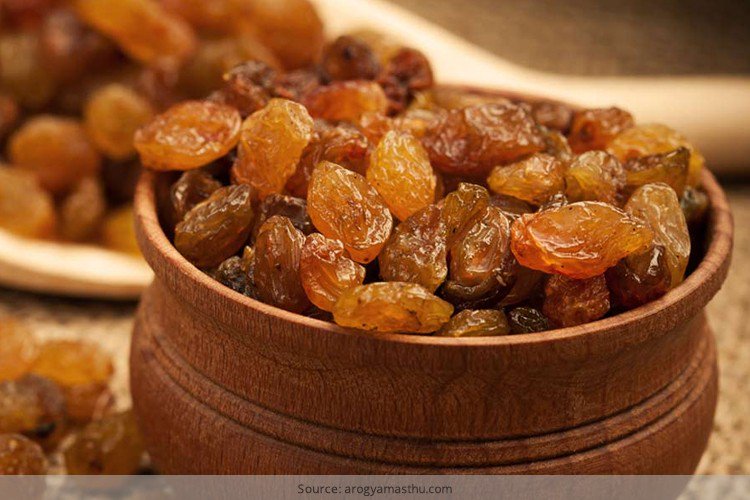
Raisins are real power pack of energy; offer lots of nutritional benefits and great alternative to sugar-rich manufactured candies. They also satiate “sweet tooth” of a baby. Raisins are known as ‘Kishmish’ in Hindi.
Enology is the study of wine and wine-making. Viticulture is the science of grape growing, although the two are often intertwined.
How Raisins are made?
Raisins are made from drying green or purple grapes either in the sun or in driers. Most raisins are dried naturally by the sun light in the vineyards only.
Once sun-dried which usually takes two to four weeks, they are graded, cleaned and packed.
Moisture content of Raisins should not exceed 16% of dry weight. Colour of Raisins depends upon the colour of grapes they are made of.
What are the Different Varieties of Raisins?
There are different varieties of raisins exist in the market.
- Major production of raisins(90 per cent) in the world is from Thompson Seedless grapes.
- The Thompson Seedless grapes are white, thin skinned grapes which produce dark brown raisins. These raisins are the best raisins available in the market. In India, Thompson Seedless grapes and its mutants are used for Raisins.
- Other varieties of raisins are “Zante currants” which are very small, dark brown, seedless raisins. These are made from black Corinth grapes which have a tart flavor and are often used in baking.
- Golden raisins are bright golden and made from the same green grapes as regular brown-colored seedless raisins but these are processed with sulfur dioxide in a dehydrator instead of being dried in the sun.
How to choose Best Raisins from Market?
Always buy raisins of good quality. Regular natural seedless grapes, golden grapes and zante currants are all similar in nutrition. So choose any variety that suits to your taste.
Characteristics of Good Raisins
The Raisins of good quality should have following characteristic features:
- Good and uniform appearance of Raisins in terms of its color(perfectly green or grey-green), size(round) and smooth texture
- A higher pulp content and a pleasing taste without any sugar coat outside
- Intact skin and its outer layers, free from injuries, dust and foreign matter
How to Store Raisins?
- Store raisins in an airtight container or bag in a cool, dark place to avoid them to dry out
- Raisins are strongly hygroscopic. Contact to moisture may cause them to moist, rot resulting into fermentation. So select Raisins with no moisture contamination
- If you are storing raisins for long time or you bought them in bulk, it is recommended to store them in a refrigerator or tightly sealed containers which can increase shelf life of Raisins from 6 months to 1 year
- Raisins are sweet in taste due to their higher concentration of sugars which can crystallize inside the fruit when stored after a long period.
- Raisins are still usable even if stored for a longer time period. Sugar grains can be dissolved by blanching Raisins in hot water or other liquids
Allergy due to Raisins
Some raisins are kept golden in color by the use of sulfur dioxide. While golden raisins are treated with sulfur dioxide, the U.S Food and Drug Administration generally recognises this substance as safe.
However, if you are allergic to sulfites, be sure to read the label on the raisin package.
When Should one Start Giving Raisins to Babies?
One should not give raisins to a baby until he/she is at-least 7 to 9 months old.
Precautions while giving Raisins to kids
- Though American Academy of Pediatrics has removed raisins from the list of choking hazard because they could not find any reported cases of children choking on raisins but still you should be careful and start giving raisins one by one under your supervision to prevent choking episode.
- You should also crush them into smaller pieces before giving them to the kids.
- Crushing them into smaller pieces is the best way to make eating raisins easier for your baby.
Are Raisins not good for Oral health of Kids?
Raisins and other dried fruits are high in sugar and can stick to your baby’s teeth, so brush your baby’s teeth carefully afterwards. Remember to wash raisins properly before consuming.
Health Benefits of Raisins for your Kids
-
Raisins/Kishmish help in Digestion
Raisins are rich in fiber. Just 100 gms of raisins provide 3.7 g of fiber which is equal to 10% of daily required levels of dietary fiber. Raisins absorb water, get swollen and gains volume on ingestion. Thereby, raisins act as an laxative by adding bulk to food and relieves constipation by decreasing transit time of food.
Raisins can also be beneficial in reducing diarrhea by absorbing liquid from loose stools. Raisins contain a large amount of vitamin C which facilitates the absorption of minerals and provides nourishment.
-
Raisins Promote Weight Gain
If your baby is underweight, Raisins can work well as a healthy weight gain diet to your baby owing to relatively rich sources of concentrated calories.
-
Raisins Boost Immunity
Small children are very prone to infection due to immature immune system. Raisins are rich in vitamin B and C, help strengthen immunity and thus body becomes less susceptible to infections.
-
Raisins Fight Against Anemia
Raisins contain a considerable amount of iron, vitamin B complex and copper that are essential for the formation of new blood. Thus it helps our body fight against Anaemia by continuously blood supply to our body.
-
Raisins Increase Bone Strength
Raisins contain large amount of Boron and Calcium which are essential for bone formation and strengthening respectively.
-
Raisins are Good for Oral Health
Studies have shown that Oleanolice which is one of the phyto-chemicals present in raisins, is effective in protecting teeth against tooth decay. It effectively prevents the growth of bacteria responsible for carious decay of tooth e.g Streptococcus Mutans and Porphyromonas Gingivalis.
-
Raisins are Good for Growth of body
Raisins are rich in minerals like potassium, phosphorus, iron, calcium and magnesium that help in mental and physical growth and development of your baby.
-
Raisins Reduce Acidosis
Being alkaline in nature Raisins can reduce acidic levels in your baby as the bodies of babies are extremely vulnerable to acid alkaline imbalance.
-
Raisins are Safe for Gluten Sensitive kids
Raisins are free of gluten protein and can be safely consumed as an alternative healthy food by kids who are intolerant to gluten.
The ICAR-National Research Centre for Grapes under Indian Council of Agriculture Research ( ICAR ), New Delhi was established on 18th January 1997 at Manjri, Pune
References
https://www.researchgate.net/publication/265089071_Raisin_Production_in_India
]]>