Morning Fatigue Reasons: Why You Wake Up Tired Even After a Full Night’s Sleep
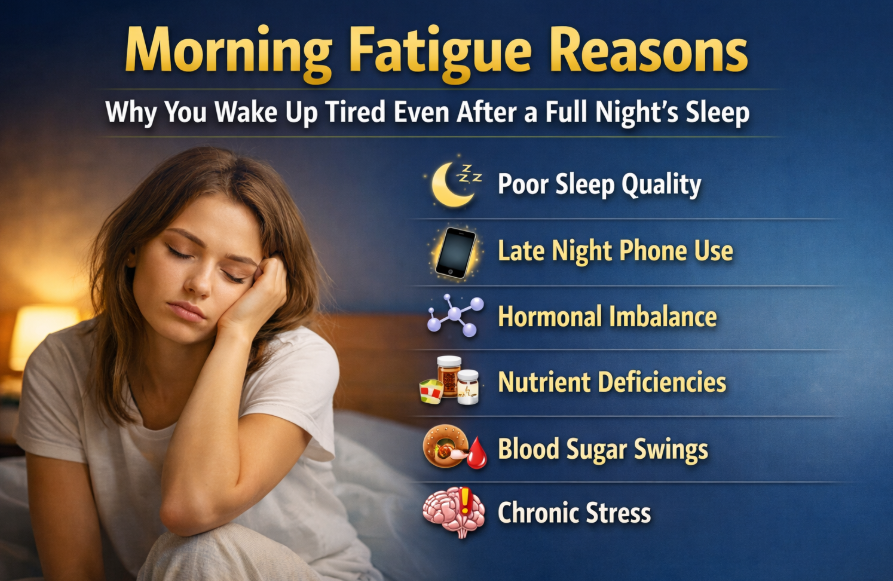
Waking up tired, heavy-headed, or exhausted despite sleeping for 7–8 hours is becoming alarmingly common. Morning fatigue is no longer just a sign of “less sleep” — it is often your body’s way of signaling deeper lifestyle, hormonal, nutritional, or digital stress issues.
In this blog, we’ll break down the real reasons behind morning fatigue, backed by modern lifestyle science, and most importantly — what you can do to fix it.
What Is Morning Fatigue?
Morning fatigue is a condition where you wake up feeling:
- Low energy
- Mentally foggy
- Body-heavy or lethargic
- Unmotivated or irritable
Even though your sleep duration looks “normal.”
This indicates that sleep quality, not just sleep quantity, is compromised.
Top Morning Fatigue Reasons You Shouldn’t Ignore
1. Poor Sleep Quality (Not Sleep Duration)
You may sleep for 8 hours, but if your sleep cycle is disturbed, your body never enters deep restorative sleep.
Common causes:
- Late-night screen usage
- Irregular sleep timings
- Stress before bedtime
- Blue light exposure suppressing melatonin
📌 Result: You wake up tired instead of refreshed.
2. Excessive Mobile Phone Use at Night
Scrolling reels, watching videos, or checking messages before sleep overstimulates your brain.
Why it causes fatigue:
- Blue light delays sleep hormones
- Dopamine spikes keep the brain alert
- Sleep onset is delayed
📱 Even 30 minutes of phone use before bed can reduce sleep quality by up to 40%.
3. Hormonal Imbalance (A Silent Energy Killer)
Hormones control your energy cycle. When they’re off-balance, fatigue becomes chronic.
Key hormones involved:
- Cortisol (stress hormone)
- Melatonin (sleep hormone)
- Thyroid hormones
- Insulin
⚠️ Early signs include:
- Morning tiredness
- Mood swings
- Weight gain
- Brain fog
4. Nutritional Deficiencies
Your body cannot produce energy without nutrients.
Common deficiencies linked to morning fatigue:
- Vitamin B12
- Vitamin D
- Iron
- Magnesium
Skipping breakfast, crash dieting, or irregular eating patterns worsen the problem.
5. Dehydration Right After Waking Up
Your body goes 6–8 hours without water during sleep.
If you start your day with tea or coffee instead of water, dehydration continues.
Dehydration leads to:
- Low blood pressure
- Reduced oxygen circulation
- Head heaviness
6. Blood Sugar Fluctuations
Late-night heavy dinners or sugary foods spike insulin, which crashes blood sugar by morning.
Symptoms include:
- Weakness on waking
- Shakiness
- Mood dips
- Cravings
7. Chronic Stress & Mental Overload
Even if your body rests, your mind may not.
Overthinking, emotional stress, and anxiety keep your nervous system in “alert mode” all night.
Result: You wake up mentally exhausted.
8. Irregular Morning Routine
Hitting snooze repeatedly confuses your internal body clock.
This disrupts:
- Cortisol rhythm
- Alertness response
- Natural wake cycle
How to Fix Morning Fatigue Naturally
1. Fix Your Night Routine
- No phone 60 minutes before bed
- Dim lights after sunset
- Sleep at the same time daily
2. Hydrate First Thing in the Morning
- 1–2 glasses of warm water
- Optional: pinch of salt or lemon
3. Eat for Energy
- Protein-rich breakfast
- Avoid sugar-heavy mornings
4. Morning Sunlight Exposure
- 10–15 minutes of natural sunlight
- Resets circadian rhythm
5. Light Morning Movement
- Stretching
- Walking
- Breathing exercises
6. Check Your Deficiencies
If fatigue persists beyond 2–3 weeks, consult a doctor for:
- B12
- Vitamin D
- Iron
- Thyroid
When Morning Fatigue Is a Warning Sign
Seek medical guidance if fatigue is accompanied by:
- Extreme weakness
- Hair fall
- Breathlessness
- Persistent sadness
- Sleep disturbances
Final Thoughts
Morning fatigue is not normal, and it’s not something to ignore or normalize.
Your body is communicating — not complaining.
Fixing sleep quality, nutrition, stress, and digital habits can dramatically transform how you wake up each day.
Disclaimer
This blog is for educational purposes only and does not replace professional medical advice. Always consult a healthcare provider for persistent symptoms.
Related Posts


About The Author

Omilights
Omilights love to post every informative piece of information on the website. We want to connect the world by way of reading and sharing information, that is why we have not restricted our postings to one or more categories. We will post whatever would be useful and happening round the world, and also hoping for your valuable feedback and comments.