Sugar-Free Biscuits and Diabetes: Are They Really Safe?
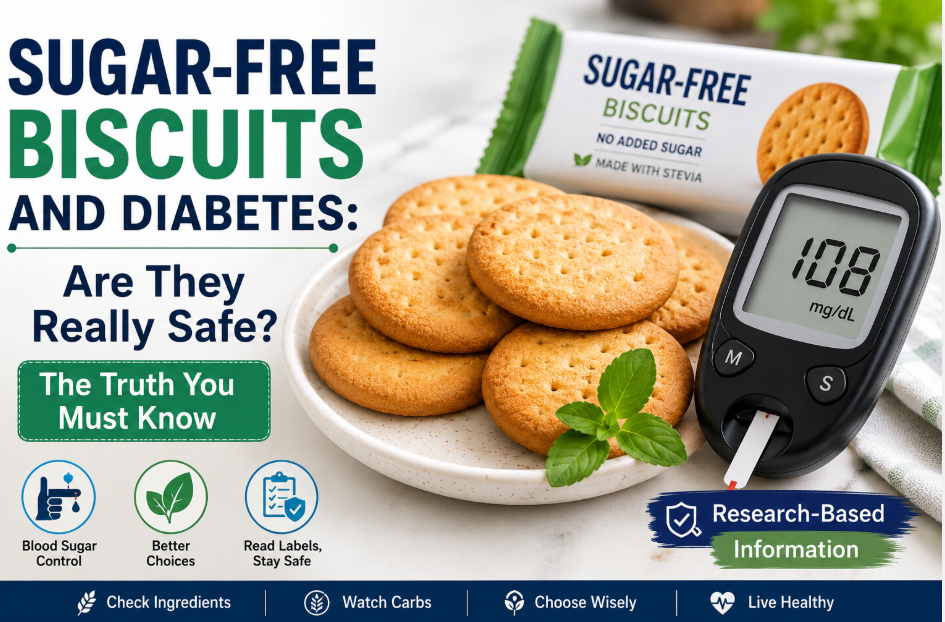
If you have diabetes or are trying to reduce your sugar intake, chances are you’ve picked up a pack of sugar-free biscuits at the supermarket. The packaging often claims “Sugar-Free,” “No Added Sugar,” or “Diabetic Friendly,” making these products appear to be healthier choices.
But are sugar-free biscuits actually safe for people with diabetes?
The answer is not as simple as yes or no.
In this research-based guide, we’ll explain what sugar-free really means, the different types of sugars and sweeteners, how carbohydrates affect blood sugar, and how to choose healthier biscuits without falling for marketing claims.
What Does “Sugar-Free” Really Mean?
One of the biggest misconceptions is that sugar-free automatically means healthy.
In reality, a sugar-free product simply contains little or no added table sugar (sucrose). It does not mean that the food is free of carbohydrates or calories.
Many sugar-free biscuits still contain:
- Refined wheat flour (maida)
- Refined starch
- Maltodextrin
- Vegetable oils
- Artificial or natural sweeteners
These ingredients can still raise blood glucose levels because the body converts carbohydrates into glucose during digestion.
Key Takeaway: Always look beyond the “Sugar-Free” label.
Understanding Different Types of Sugar
Not all sugars are the same. Here’s a simple breakdown:
1. Glucose
Glucose is the body’s primary source of energy and the sugar found in your bloodstream. It raises blood sugar levels quickly.
2. Fructose
Fructose is naturally found in fruits and honey.
Whole fruits are healthy because they also contain fiber, vitamins, and antioxidants. However, excessive intake of processed fructose may contribute to metabolic health problems.
3. Sucrose
Sucrose is ordinary table sugar.
It contains approximately:
- 50% Glucose
- 50% Fructose
This is the sugar commonly added to biscuits, cakes, desserts, and beverages.
4. Lactose
Lactose is the natural sugar present in milk and dairy products.
5. Maltose
Maltose is found in malted grains and certain processed foods.
Types of Sweeteners Used in Sugar-Free Biscuits
Instead of regular sugar, manufacturers often use sweeteners.
These fall into three major categories.
Natural Sweeteners
Natural sweeteners are derived from plants.
Stevia
- Plant-based
- Zero or very low calories
- Minimal effect on blood sugar
- Popular among people with diabetes
Monk Fruit
- Extracted from monk fruit
- Naturally sweet
- Nearly calorie-free
- Does not significantly increase blood glucose
Artificial Sweeteners
Artificial sweeteners are manufactured to provide sweetness with very few calories.
Common examples include:
- Sucralose
- Aspartame
- Saccharin
Most approved artificial sweeteners are considered safe within recommended daily intake limits set by food safety authorities.
Sugar Alcohols (Polyols)
Many people confuse sugar alcohols with artificial sweeteners.
Common sugar alcohols include:
- Maltitol
- Sorbitol
- Xylitol
- Isomalt
Unlike artificial sweeteners, sugar alcohols contain carbohydrates and calories.
Some, particularly Maltitol, may raise blood sugar levels in certain individuals.
Large amounts may also cause:
- Gas
- Bloating
- Stomach discomfort
- Diarrhea
The Biggest Mistake People Make
Many people assume that if a biscuit contains no sugar, it must be safe.
Unfortunately, that’s not always true.
Imagine two biscuits:
Biscuit A
- Contains sugar
Biscuit B
- Sugar-free
- Made primarily with refined flour (maida)
Both can potentially increase blood sugar because refined carbohydrates are quickly converted into glucose.
This is why people with diabetes should focus on total carbohydrates, not just sugar content.
What Does Research Say?
Research suggests that replacing sugar with low-calorie sweeteners may reduce overall calorie intake for some individuals.
However, current scientific evidence does not support the idea that simply eating sugar-free biscuits will automatically improve diabetes control or promote weight loss.
Managing diabetes requires a comprehensive lifestyle approach that includes:
- Balanced nutrition
- Portion control
- Regular physical activity
- Adequate sleep
- Stress management
- Following your healthcare provider’s advice
Sugar-free products should be viewed as occasional alternatives—not miracle foods.
How to Choose a Healthier Sugar-Free Biscuit
If you decide to buy sugar-free biscuits, read the nutrition label carefully.
Look for:
✅ Whole wheat or oats listed as the first ingredient
✅ Higher dietary fiber (at least 3–5 g per 100 g)
✅ Lower total carbohydrates
✅ No added sugar
✅ Minimal palm oil
✅ Short ingredient list
Avoid products where refined wheat flour (maida) is the first ingredient.
Can People with Diabetes Eat Sugar-Free Biscuits?
Yes—but in moderation.
Sugar-free biscuits are still processed foods.
Instead of making them a daily snack, enjoy them occasionally and in appropriate portion sizes.
Healthier snack alternatives include:
- Roasted chickpeas
- Unsalted almonds
- Walnuts
- Plain unsweetened yogurt
- Sprouts
- Fresh vegetables
- Seeds
These foods provide more fiber, healthy fats, protein, and nutrients while helping you feel full for longer.
Final Verdict
Sugar-free biscuits are not automatically healthy.
While they contain little or no added sugar, many still provide refined carbohydrates that can affect blood glucose levels.
Before buying any packaged biscuit, always read:
- Ingredients list
- Total carbohydrates
- Dietary fiber
- Serving size
- Added sugars
The best strategy for diabetes management is not simply avoiding sugar—but choosing nutrient-rich foods, eating balanced meals, and maintaining a healthy lifestyle.
Frequently Asked Questions (FAQs)
Are sugar-free biscuits good for people with diabetes?
They can be eaten occasionally, but they should not replace healthy whole foods. Always check the carbohydrate content and ingredient list.
Do sugar-free biscuits raise blood sugar?
Yes. Many sugar-free biscuits contain refined flour and carbohydrates that may increase blood sugar levels.
Which sweetener is considered better for diabetes?
Natural sweeteners like stevia and monk fruit generally have minimal impact on blood sugar, but individual needs vary.
Can I eat sugar-free biscuits every day?
Daily consumption is not recommended. Whole-food snacks are usually healthier choices.
Related Posts


About The Author

Omilights
Omilights love to post every informative piece of information on the website. We want to connect the world by way of reading and sharing information, that is why we have not restricted our postings to one or more categories. We will post whatever would be useful and happening round the world, and also hoping for your valuable feedback and comments.