Types of Bread Explained: Which Bread Is the Healthiest?
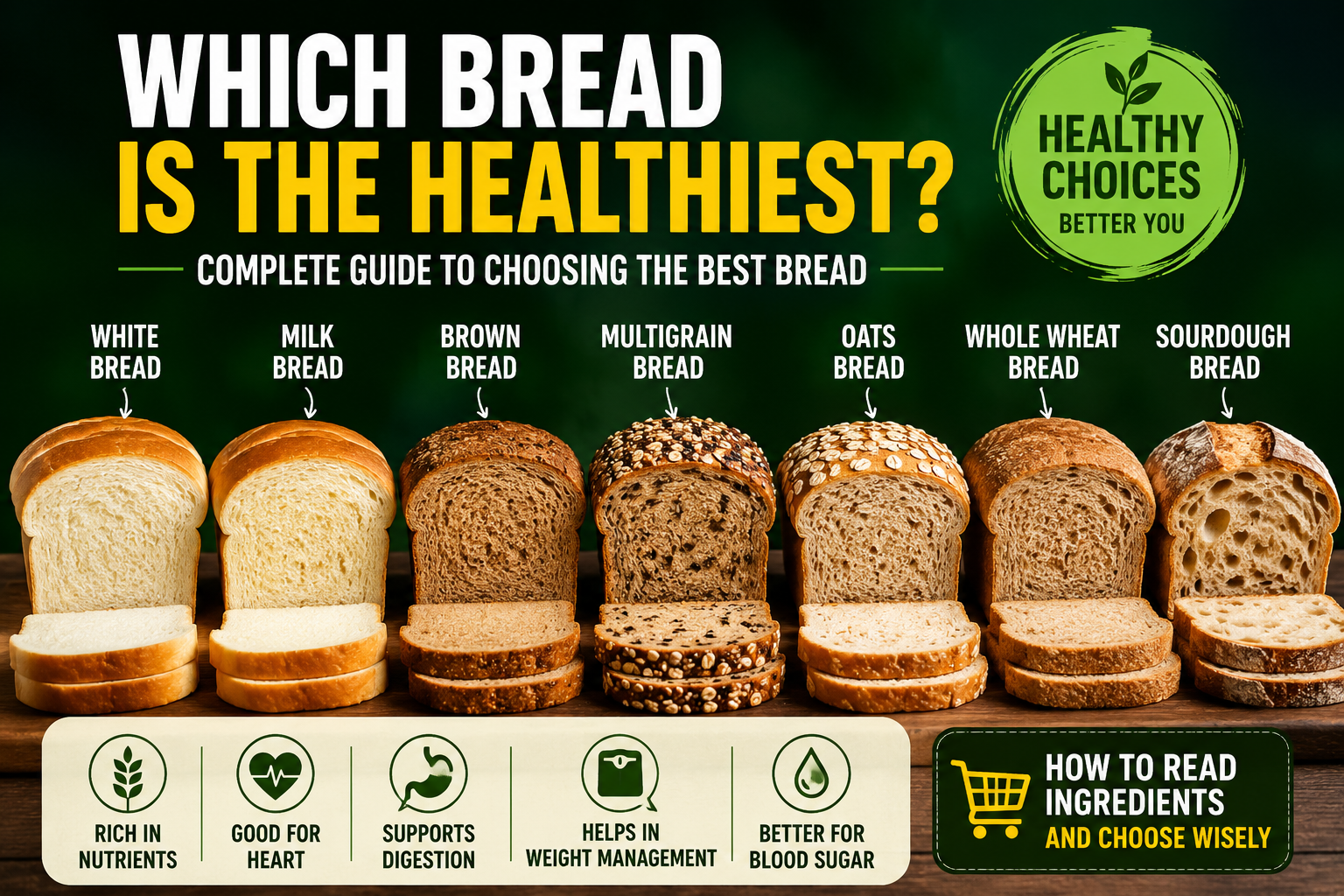
Choosing the right bread has become more confusing than ever. Grocery store shelves are filled with labels like Whole Wheat, Brown Bread, Multigrain, Oats Bread, Milk Bread, and Sourdough. While these names sound healthy, they don’t always tell the full story.
Many people assume that darker bread is automatically healthier or that multigrain bread is always better than white bread. In reality, the nutritional quality of bread depends on its ingredients—not just its marketing.
In this guide, we’ll explain the most popular types of bread, their nutritional value, and how to choose the healthiest option for your lifestyle.
1. Whole Wheat Bread
Whole wheat bread is one of the healthiest everyday bread options because it uses the entire wheat grain, including the bran, germ, and endosperm. This means it naturally contains more fiber, vitamins, minerals, and antioxidants than refined white bread.
Benefits
- Rich in dietary fiber
- Supports digestive health
- Helps keep you full for longer
- Provides steady energy
- Better blood sugar response than refined bread
What to Check
Look for 100% Whole Wheat Flour as the first ingredient. Some breads labeled “wheat bread” may still contain refined flour.
2. Brown Bread
Brown bread often gives the impression of being healthier simply because of its darker color. However, not all brown bread is made from whole grains.
Some manufacturers add caramel coloring or molasses to refined flour, giving the bread a brown appearance without significantly improving its nutritional value.
Buying Tip
Always read the ingredient list. If whole wheat flour is not the first ingredient, it may not be a healthy choice.
3. Multigrain Bread
Multigrain simply means the bread contains more than one type of grain, such as wheat, oats, barley, millet, corn, or rye.
However, the label doesn’t tell you how much of each grain is included. Some multigrain breads contain mostly refined flour with only small amounts of other grains.
Benefits
- Can provide a wider variety of nutrients
- May contain different whole grains
- Good option when made primarily with whole grains
Buying Tip
Choose multigrain bread only if whole wheat flour is listed first and other grains appear in meaningful amounts.
4. Oats Bread
Oats are naturally rich in beta-glucan, a soluble fiber that has been associated with improved heart health and healthier cholesterol levels.
However, many commercial oats breads contain only a small percentage of oats.
Benefits
- May support heart health
- Provides additional fiber
- Can improve satiety
Buying Tip
Check that oats appear near the top of the ingredient list rather than being included in very small amounts.
5. Milk Bread
Milk bread has a soft texture and slightly sweet taste, making it popular among children.
Many commercial varieties contain added sugar and fat to improve flavor and softness.
Is It Healthy?
Milk bread is fine occasionally, but it isn’t the best everyday choice if you’re looking for maximum nutrition.
For children, pairing bread with protein-rich foods like eggs, yogurt, peanut butter, or paneer creates a more balanced meal.
6. Sourdough Bread
Sourdough bread is made using natural fermentation instead of commercial yeast. The longer fermentation process develops a unique flavor and may make the bread easier to digest for some people.
Some studies suggest traditional sourdough bread may produce a lower blood sugar response compared with conventional white bread, although individual responses vary.
Benefits
- Natural fermentation
- Distinct flavor
- May be easier to digest
- Often lower glycemic response than white bread
Remember that portion size still matters.
How to Choose Healthy Bread
Whenever you buy bread, follow these simple rules:
- Whole wheat flour should be the first ingredient.
- Choose bread with higher fiber.
- Look for lower added sugar.
- Avoid excessive sodium.
- Short ingredient lists are generally preferable.
- Don’t judge bread by its color alone.
- Verify the grain content in multigrain bread.
- Check manufacturing and expiry dates.
- Limit breads with excessive preservatives.
- Pair bread with protein and vegetables for a balanced meal.
Best Bread for Diabetes
People with diabetes generally benefit from breads that contain more fiber and fewer refined carbohydrates.
Good options include:
- 100% Whole Wheat Bread
- Traditional Sourdough Bread
- Whole Grain Bread
Portion control remains essential regardless of the bread you choose.
Best Bread for Weight Loss
For weight management, choose breads that provide fiber and combine them with protein.
Good combinations include:
- Whole wheat bread with eggs
- Whole wheat bread with cottage cheese (paneer)
- Whole wheat bread with sprouts
- Whole wheat bread with peanut butter (in moderation)
This combination helps increase fullness and may reduce unnecessary snacking.
Best Bread for Children
Whole wheat bread is generally a better everyday option than milk bread.
Healthy sandwich fillings include:
- Egg
- Paneer
- Cheese (in moderation)
- Peanut butter
- Vegetable fillings
- Hummus
Limit sugary spreads as daily toppings.
Overall Ranking of Bread
Based on nutritional quality, ingredient profile, and overall health benefits:
🥇 Traditional Sourdough Bread
🥈 100% Whole Wheat Bread
🥉 Whole Grain Bread
- Oats Bread (with a significant amount of oats)
- High-quality Multigrain Bread
- Brown Bread (if genuinely whole grain)
- Milk Bread
- White Bread
Final Thoughts
The healthiest bread isn’t determined by its name or packaging—it depends on its ingredients.
Instead of choosing bread based on labels like Brown, Multigrain, or Oats, always read the ingredient list and nutrition facts. A high-quality loaf should list 100% whole wheat flour or other whole grains as the primary ingredient, provide good fiber, and contain minimal added sugar and unnecessary additives.
Making informed choices can help support better nutrition, whether your goal is improving heart health, managing diabetes, losing weight, or simply eating a more balanced diet.
FAQs
Which bread is the healthiest?
Traditional sourdough, 100% whole wheat bread, and whole grain bread are generally among the healthiest choices.
Is multigrain bread healthier than whole wheat bread?
Not always. Multigrain bread can still contain mostly refined flour. Always check the ingredient list.
Is brown bread healthier than white bread?
Only if it is made primarily from whole wheat flour rather than colored refined flour.
Is sourdough bread good for weight loss?
Sourdough can be part of a balanced diet, but weight loss depends on total calorie intake and portion sizes.
What is the best bread for diabetes?
Many people with diabetes choose 100% whole wheat or traditional sourdough bread because of their higher fiber content, while also paying attention to portion size and overall meal balance.
Related Posts


About The Author

Omilights
Omilights love to post every informative piece of information on the website. We want to connect the world by way of reading and sharing information, that is why we have not restricted our postings to one or more categories. We will post whatever would be useful and happening round the world, and also hoping for your valuable feedback and comments.